
Net metering and the daily demand charge
NV Energy's daily demand charge, explained for a home with solar
What NV Energy's daily demand charge measures, what it costs, and what it does to a Las Vegas home with solar. Scheduled for January 1 2027, under appeal.
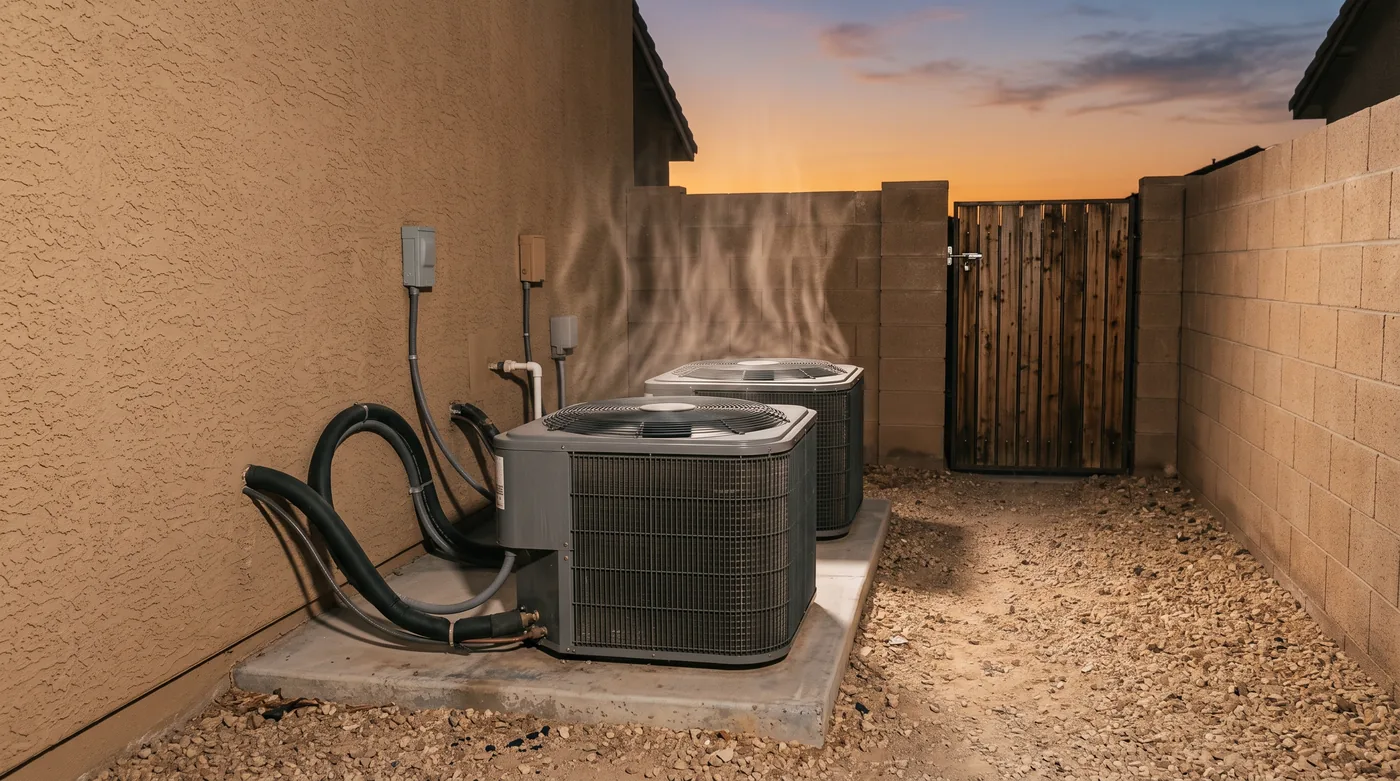
NV Energy's daily demand charge is $0.14 for every kilowatt in your single highest 15 minute stretch of power use, charged every day and added up over the billing period. NV Energy's own page puts the typical Southern Nevada home near 3.5 kilowatts, about $0.49 a day. It is scheduled for January 1 2027, and it is under appeal.
The short version, before anything else
Three sentences carry the whole thing.
First, the charge is priced on power, not on energy. It looks at how hard your house pulled at its worst moment, not at how much electricity you used all month.
Second, the worst moment is measured in 15 minute blocks, and the clock resets every day. Your bill collects one peak per day and adds them together.
Third, it is scheduled for January 1 2027 and under appeal to the Nevada Supreme Court. It has already moved twice, so any page that gives you a date without a checked-on line beside it is asking you to trust a guess.
What the charge measures, exactly
NV Energy's fact sheet says it plainly: daily demand "is calculated based on each customer's highest 15-minute interval of electricity use and this resets every day of the month. These daily peaks are totaled over the billing period to determine the monthly Daily Demand charge."
So the meter is not looking for the hour you used the most. It is looking for one quarter hour, the worst one, and then it forgets it and starts again at midnight.
That is a different mental model from the one most people carry. Your usage charge rewards using less. The demand charge rewards using less at once. You can cut your monthly kilowatt hours and leave your demand charge exactly where it was, because the charge never looks at your total.
Kilowatts and kilowatt hours are not the same thing, and here the difference is the whole story
This is where the term gets misreported, and it is worth being precise about, because the two units produce very different numbers.
A kilowatt hour is a quantity of energy. It is what your usage line is priced on. Run a 1 kilowatt load for an hour and you have used 1 kilowatt hour.
A kilowatt is a rate. It is how hard the house is pulling right now. A three ton air conditioning condenser pulls in the region of 3 to 4 kilowatts while it is running, and it pulls a surge above that in the instant it starts.
The daily demand charge is priced per kilowatt. If you see the charge written as 14 cents per kilowatt hour, that is the energy unit, not the power unit, and the arithmetic that follows from it will not describe your bill. NV Energy's own words are "a $0.14 per kW daily demand". KTNV, reporting the Public Utilities Commission of Nevada vote on November 18 2025, wrote it the same way: "14 cents per kilowatt of electricity used during their highest 15-minutes of energy use each day".
What it costs, using NV Energy's own numbers
NV Energy publishes a worked example, and we would rather quote theirs than invent ours.
| What NV Energy states | Figure |
|---|---|
| Rate | $0.14 per kilowatt of the daily 15 minute peak |
| Typical Southern Nevada peak | about 3.5 kilowatts |
| Typical daily charge | about $0.49 |
| Expected average bill impact | between $15 and $20 a month |
Their page then says the other parts of the bill come down to meet it. The monthly basic service charge was reduced on October 1 2025, and NV Energy says the per kilowatt hour energy rate will drop again when daily demand is broken out in January 2027. The Nevada Independent, in its May 7 2026 explainer, put that volumetric reduction at 1.675 cents per kilowatt hour. NV Energy describes the whole restructure as revenue neutral: "This is not a new cost, it is not a rate hike."
Whether it is neutral for you depends entirely on the shape of your day, which is the part no press release can tell you.
Work it through for a house that is not average. Two air conditioning units that overlap for a full quarter hour put you somewhere near 8 kilowatts. At $0.14 that is $1.12 for that day. Across a 31 day summer month, if that overlap happens every day, you are looking at roughly $35 in demand charges for the month, against roughly $15 for the 3.5 kilowatt house. Same rate, same tariff, very different bill, and the only thing that changed is whether two big loads happened to run at the same time.
It is not a time of use charge, and that catches almost everyone out
The single most common misunderstanding we hear is that the demand charge is about the evening. It is not, and NV Energy says so directly in its own frequently asked questions:
No, this is not a time of use (TOU) rate. This is a flat, fixed cost that remains the same every hour, each day. Whether your maximum energy use is at 2 a.m. or 6:45 p.m., the rates are the same.
Read that twice if you have been told otherwise. A pool pump and a dryer and an oven all landing together at 11 in the morning costs exactly what the same three landing together at 7 in the evening costs.
That matters for two reasons. It means the advice "shift everything to after 9 pm" does not help with this charge, even though it genuinely helps on NV Energy's time of use plan, where summer on peak energy is $0.47155 per kilowatt hour against $0.07305 off peak. And it means any battery set up only to cover the evening window may be sitting idle during the quarter hour that actually sets your demand charge.
What changes if you already have panels on the roof
Here is the part the general coverage skips.
Solar reduces the energy you buy. That is the usage line. It does very little to the size of your largest 15 minute draw, for a reason that is obvious once you see it: peaks tend to happen when production is low or gone. Late afternoon when the array is falling off. Evening when it is finished. First thing in the morning. A midday peak can be partly covered by the array, and that is real, but the array cannot cover a peak it is not awake for.
NV Energy is explicit about the direction of travel for solar homes. Its fact sheet says "Rooftop solar customers in Southern Nevada may see a modest bill increase due to more accurate cost allocation." Its frequently asked questions say "rooftop solar customers in southern Nevada can expect to see a small increase in their bills." The Nevada Independent put the figure at about $12 a month.
Since NV Energy's own comparison tool went live, real numbers have started appearing. FOX5 Vegas reported on September 2 2026 on two Southern Nevada solar customers who ran the tool: one saw an additional $183 a year, another $113 a year. That is $9 to $16 a month, which brackets the $12 estimate neatly and is the closest thing to evidence anybody has published.
Can your net metering credits pay it? Here is exactly what each source says
You will find this stated as settled fact in both directions. It is not settled, so we are going to show you the actual sentences and the dates, and leave you to weigh them.
NV Energy's own page, read on 2026-09-19, describing its comparison tool, says: "For solar customers, the annual comparison reflects the total bill and does not include excess energy credits, which will be applied each month to daily demand costs."
Solar United Neighbors, quoted by The Nevada Independent on 2026-05-07, says the opposite: "Solar customers cut grid strain when it matters most. This charge ignores that, and bill credits can't offset it."
Both of those are real, sourced and current. They cannot both be right in full, and the tariff language that would settle it is not published in a form a homeowner can read today. What we can tell you without guessing:
- Your net metering credit under Tier 4 is earned in kilowatt hours, valued at 75 percent of the retail rate, and confirmed by the Public Utilities Commission of Nevada. A credit measured in energy and a charge measured in power are not naturally the same currency, which is why the question exists at all.
- NV Energy, in its own words, expects solar homes to pay more after the restructure, not less. That is the utility's own forecast, not an opponent's claim, and it does not depend on how the credit question resolves.
We recheck this page monthly. When the tariff sheet is published, the sentence above changes and the checked-on date at the top of this page changes with it.
Where the date and the court case stand
The dates, in order, each one from a source listed at the bottom of this page:
- 2025-02-18: Nevada Power Company, doing business as NV Energy, files docket 25-02016 with the Public Utilities Commission of Nevada, an application to adjust its annual revenue requirement for general rates across all customer classes.
- 2025-09-16: the commission approves the restructure, with daily demand first set to begin April 1 2026.
- 2025-11-18: the commission votes unanimously to keep it, after Chispa Nevada and the Attorney General's Bureau of Consumer Protection ask for reconsideration.
- 2026-03-31: the commission votes to delay again. April 1 2026 had already become October 2026. It now becomes January 1 2027.
- 2026-05-26: in Clark County District Court, Judge Mary Kay Holthus denies the challenge brought by the Attorney General's office, the Bureau of Consumer Protection and Vote Solar, letting the charge proceed.
- 2026-05-26: Attorney General Aaron Ford responds the same day: "The court got it wrong, and I will be appealing its ruling to the Nevada Supreme Court."
- 2026-08-19: a legislative committee declines to advance a bill draft that would have banned daily demand charges for residential customers. KTNV reports that the case has been appealed to the Nevada Supreme Court, with no future hearings scheduled.
So today, on this page's checked-on date, the honest sentence is the one we have used throughout: scheduled for January 1 2027, under appeal. Not cancelled. Not certain. If the Supreme Court moves, this page moves with it, and there is a longer account of the procedural history on our demand charge appeal status page.
What actually moves your peak
Because the charge is priced on simultaneity rather than on total use, the levers are different from the ones you already know.
Sequencing is free and it works. The dryer, the oven, the dishwasher, the pool pump and the electric vehicle charger are all large loads that you have some control over. Running them one after another instead of together changes your peak without changing your total. Air conditioning is the one you mostly cannot sequence, which is why the AC is usually the floor under your peak rather than the thing on top of it.
Vehicle charging is the classic peak maker. A Level 2 charger is a large, steady load that runs for hours. If it overlaps with the compressor on a July afternoon, it sets your peak for that day and it will do it again tomorrow.
A second air conditioning unit is the other one. In a valley full of two-unit and four-unit homes, the overlap between condensers is the single most likely explanation for a peak well above the 3.5 kilowatts NV Energy quotes.
Using less overall barely touches it. Turning lights off saves energy. It does not change the quarter hour when both condensers were running.
What a battery can and cannot do about it
We will be straight with you, because this is the point where solar sales pitches usually stop being careful.
A battery is the only thing in a house that can hold a peak down without you changing your behaviour, because it can supply power from storage at the moment the house asks for it. That is a real capability and nothing else on the market does it for a home.
But it does not eliminate the charge, and anyone who tells you it does is selling. Three limits, all of them structural:
- A battery can only cover up to its own output rating. If your house pulls 9 kilowatts and the battery can deliver 5, the grid still supplies the rest and the meter still sees it.
- A battery can only cover a peak if it has charge left at that moment, and if its control settings tell it to discharge then. Since the demand charge is flat across the clock, a battery configured purely for the evening on peak window can miss a midday peak entirely.
- You will still have a demand charge. A well set up battery can lower the peak it is measured on. It cannot take the line off the bill.
We go through the arithmetic, including the honest cases where a battery does not pay for itself against this charge alone, in can a battery get you out of the demand charge. The separate and much stronger evening argument, which is about the $0.47155 summer on peak rate on NV Energy's time of use plan rather than about demand, is in why a battery pays for itself between 6 and 9 pm. And what a battery does when the grid actually goes down is a different question again.
How to find your own peak before January 1 2027
You do not have to wait for a bill to find out where you stand, and you should not take our estimate or anyone else's for a number you can look up.
NV Energy says residential customers enrolled in MyAccount can already see their usage in 15 minute increments. Since late August 2026 there has also been a Daily Demand Annual Comparison tile inside MyAccount that takes a year of your own billing data and shows what the restructure would have done to it. NV Energy notes two limits on that tool that matter: it needs a full year on the same rate schedule, so switching to time of use during the year breaks it, and for solar customers the comparison shows the total bill without excess energy credits applied.
Pull your own 15 minute data, find your worst quarter hour in July or August, multiply by $0.14, and multiply by the days in the month. That number is yours. It is better than any average, including NV Energy's.
What we would tell you if you called us today
We are a licensed Las Vegas electrical contractor, so we look at this as a wiring and load problem before we look at it as a sales problem.
If your peak is near 3.5 kilowatts, the restructure is probably close to a wash for you and you should not buy anything because of it. If you have two condensers, or a vehicle charger, or a pool, your peak is likely much higher and it is worth measuring before January. If you already have panels, expect the direction NV Energy itself describes, a small increase, and plan around your peak rather than around your total.
And if somebody knocks on your door this autumn with a number for what the demand charge will cost you, ask them which unit they are using. If the answer is per kilowatt hour, they are describing a different charge.
Questions people ask us
How much is NV Energy's daily demand charge?
NV Energy's own page puts it at $0.14 per kilowatt of your highest 15 minute interval, charged every day and totalled over the billing period. The utility says a typical Southern Nevada home peaks near 3.5 kilowatts, which works out to about $0.49 a day, and it expects the average bill impact to land between $15 and $20 a month.
When does the daily demand charge start?
It is scheduled for January 1 2027 in Southern Nevada, and it is under appeal to the Nevada Supreme Court. The date has already moved twice. It was first set for April 1 2026, then pushed to October 2026, then to January 1 2027 by a vote of the Public Utilities Commission of Nevada on March 31 2026.
Is the demand charge based on when I use power?
No. NV Energy's own answer is that this is not a time of use rate. Its page says the cost is the same every hour of every day, and that it makes no difference whether your maximum use happens at 2 in the morning or at a quarter to seven in the evening. Only the size of the peak matters, not the clock.
Do solar panels stop the daily demand charge?
No. Panels reduce the energy you buy, which is a different part of the bill. The demand charge is priced on the size of your largest 15 minute draw, and NV Energy says rooftop solar customers in Southern Nevada should expect a small increase in their bills once the charge is broken out. Panels alone do not shrink a peak that happens after dark.
Can my net metering credits pay the demand charge?
The sources disagree and we will not guess. NV Energy's own page says excess energy credits will be applied each month to daily demand costs. Solar United Neighbors, quoted by The Nevada Independent in May 2026, says bill credits cannot offset it. We recheck this page monthly and will print the tariff language once it is published.
What is the difference between a kilowatt and a kilowatt hour on my bill?
A kilowatt hour is a quantity of energy, which is what your usage charge is priced on. A kilowatt is a rate of power, how hard your house is pulling at one moment. The daily demand charge is priced in kilowatts. That is why running the same total energy more gently across the day can change it.
Where these numbers come from
- NV Energy, Southern Nevada Daily Demand, guide and frequently asked questions checked 2026-09-19
- NV Energy, Daily Demand fact sheet PDF, dated 2026-06 checked 2026-09-19
- NV Energy, Nevada Power Company electric rate schedules for residential customers, effective 2026-07-01 checked 2026-09-22
- Public Utilities Commission of Nevada, Nevada Power docket list, docket 25-02016 filed 2025-02-18 checked 2026-09-19
- The Nevada Independent, What is NV Energy's daily demand charge and how will it affect customers, 2026-05-07 checked 2026-09-19
- KTNV, PUCN votes to maintain NV Energy's daily demand charge, 2025-11-18 checked 2026-09-19
- FOX5 Vegas, NV Energy demand charge delayed again, now pushed January 2027, 2026-03-31 checked 2026-09-19
- FOX5 Vegas, Judge allows NV Energy demand charge to proceed, attorney general to appeal, 2026-05-26 checked 2026-09-19
- Nevada Attorney General, statement on the decision in the NV Energy demand charge litigation, 2026-05-26 checked 2026-09-19
- KTNV, Nevada lawmakers decline taking on NV Energy's daily demand charge, 2026-08-19 checked 2026-09-19
- FOX5 Vegas, Why some Las Vegas solar customers may see higher bills with Daily Demand, 2026-09-02 checked 2026-09-19
- NV Energy, Net Metering and Energy Storage Interconnection Handbook, revision 10/16/2025 checked 2026-09-19
- Public Utilities Commission of Nevada, net metering tiers and the 75 percent credit checked 2026-09-19
Actual utility rates may go up or down and actual savings may vary. Every figure on this page is an estimate based on the sources listed below, not a promise about your home.
We recheck this page monthly. Last checked 2026-09-19. If a number here has moved, tell us and we will fix it the same week.