
Solar Rescue
Your solar company went out of business. What now?
Your Las Vegas installer closed. What to do today, which warranty survives, what happens to your loan, and how to read the court record yourself.
Start here. Your panels keep producing. Your loan or your lease keeps running. Your equipment warranties are usually claimed from the manufacturer, not from the company that closed. The part you lose is the workmanship warranty, and it turns into a claim in the bankruptcy. Below is the order to do things in today, then the reasons behind each one.
Do these seven things today
- Save your documents before the customer portal goes dark. Solar Power World's June 2026 piece on the Freedom Forever bankruptcy makes this the first step: downloading everything from the company's customer portal is a good first move for anyone holding a contract with it. Save the signed contract, the warranty pages, the design, the production estimate, the permit documents and the interconnection paperwork.
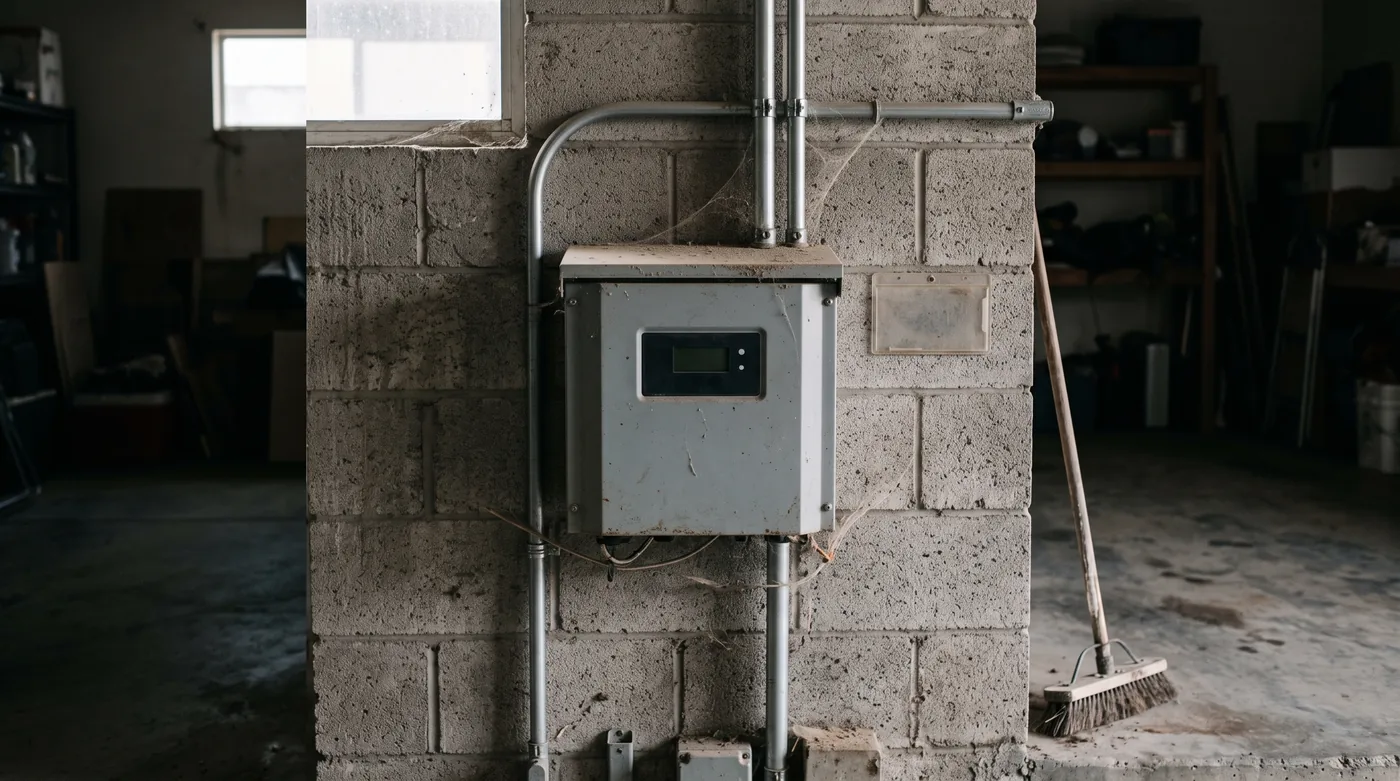
- Photograph the equipment labels. The panel brand and model are printed on a label on the back or edge of the frame. The inverter brand, model and serial number are on the case, usually in the garage or on the exterior wall. Take clear photos. You will need them for any manufacturer claim, and you will need them to get a sensible repair quote.
- Find the warranty page in your contract. Not the brochure. The contract. You are looking for which warranties are the installer's own and which are passed through from a manufacturer. The next section explains why this single page decides most of what follows.
- Find out who holds your loan, lease or power purchase agreement. The name on your monthly statement is usually a finance company, not the installer. Write down that name and the account number.
- Check whether the system is still producing. The inverter display and your bill both tell you something. There is a step by step check in how to find out if your system still works.
- Look up the licence. The Nevada State Contractors Board's residential solar page tells homeowners to verify that a contractor's licence has an Active status on the board's own search page. Do that for the company that installed your system, and for anyone you are considering hiring next.
- Find out whether there is a court case, and whether a deadline is still open. This is the part with a clock on it. It is covered below.
Four facts decide what happens next
1. Your loan or your lease did not end
The installer sold you a system. A finance company lent you the money, or bought the system and leased it to you. Those are two different contracts with two different companies, and the installer closing does not cancel the second one.
Solar Power World, writing in June 2026 about homeowners with Freedom Forever contracts, states it directly: the bankruptcy does not do away with your contractual obligation to keep making payments. If you stop paying, the consequences land on your credit, not on the company that closed.
So keep paying. If you want to argue that you did not get what you paid for, that argument belongs in the bankruptcy case or with the finance company, not in a missed payment.
2. The workmanship warranty was the installer's own promise
Your workmanship warranty covers the labour: the mounting, the wiring, the conduit, and the holes in your roof. In Nevada that promise is not optional. NRS 598.9821 requires a written warranty on the installation and on the roof penetration that expires not earlier than 10 years after installation.
That warranty was a promise from the company that installed the system. When that company is liquidated under Chapter 7, it stops operating and its affairs are handled by a trustee appointed by the court. A promise it made to you becomes a claim you file in the case, by the deadline the court sets. Whether anything is paid on claims like yours is decided in the case, from whatever the estate holds. It is not decided by us, and nobody who knocks on your door can decide it either.
The practical point is the deadline. Every Chapter 7 case sets a date by which proofs of claim must be filed. The federal courts' form page shows that the current proof of claim form is Official Form B 410. Two things go on it that you already have: the case number and the amount you say you are owed.
3. Your equipment warranties are usually still alive
This is the good news, and most people do not know it.
NRS 598.9821 requires an agreement for the purchase of a system to include written warranties on the component parts, parts and labour, of not less than 10 years for collectors and storage and not less than 7 years for inverters. The statute then says something that matters enormously to you now. Those warranties come "either directly from the solar installation company or passed through from the manufacturer of the component parts."
Read that twice. Nevada law allowed your installer to satisfy the requirement two different ways. If your panels and inverters carry the manufacturer's own warranty, the manufacturer is still in business and the warranty is claimed from the manufacturer, not from the company that closed. If instead the installer wrote its own component warranty and did not pass through the manufacturer's, you are back in the bankruptcy case for that part.
Your contract's warranty page is where that question is answered. So is the manufacturer's website, once you have the model and serial numbers from step 2.
4. Repairing is not the same as adding panels
If your system needs work, the way it is done affects the rate you are paid for the power you export. NV Energy's Net Metering and Energy Storage Interconnection Handbook, in the version dated 10/16/2025, sets out three different outcomes.
| What you do | What the handbook says happens to your net metering rate |
|---|---|
| Replace a failed system or component | A system replacement may allow you to keep your existing closed net metering rate. Every replacement application goes through Engineering Review to decide whether staying on the same rate is allowable. |
| Add generating capacity, meaning more panels | A system expansion that adds additional renewable capacity results in a net metering rate change if you are not already on the applicable rate. |
| Add a battery and nothing else | A system expansion that only adds an energy storage system, with no additional renewable capacity, does not result in a net metering rate change. |
If you were connected years ago on one of the closed rates, this is the most expensive decision in the whole repair. A larger system sounds like an upgrade. It can also move you off the rate you have been on since the day the meter was set. There is more detail in adding panels changes your net metering rate and in what 75 percent of retail actually costs you.
Actual utility rates may go up or down and actual savings may vary.
How to find out which warranty you actually have
Work through this in one sitting with the contract in front of you.
- Find the warranty section. It is usually one or two pages, near the end, sometimes titled Limited Warranty.
- Separate the promises by who made them. A line that says the panels carry a 25 year manufacturer warranty is one thing. A line that says the company guarantees production, or guarantees its own workmanship, is another.
- Check whether the manufacturer's warranty was registered. Some manufacturers want the system registered at the time of installation. If your installer did that, it will be in the handover documents. If you cannot tell, contact the manufacturer with the serial numbers and ask what proof of installation date they accept.
- Write down what is left. By the end you should have a short list: these components are covered by a manufacturer, this work was covered by the installer, this is the part I have no cover for.
That list is the thing to hand a contractor. It is also what turns a vague quote into a specific one.
If the company held a Nevada licence
The Nevada State Contractors Board licenses residential contractors, investigates complaints, and runs the Residential Recovery Fund. It is worth your time even if the company is gone.
KTNV reported on May 17 2024 that the board had set up an investigative unit focused on the solar industry, and that of roughly 3,000 complaints the board receives in a year, about one third relate to solar.
The board's residential solar page carries the licence search, links for complaints against licensed and unlicensed contractors, and its investigations phone numbers: (702) 486-1160 for Southern Nevada and (775) 688-1150 for Northern Nevada.
The Residential Recovery Fund
The fund exists to pay some homeowners back when a licensed residential contractor causes them a loss. From the board's own page describing it:
- It is for owners of single family residences who contracted with a properly licensed residential contractor, and who occupy the residence.
- It covers actual damages from a contractor's violation of law or an unsatisfied court judgment.
- The maximum paid on a claim cannot exceed $40,000.
- You must file a complaint with the board within four years after the completion of work.
- Money you recover from other sources is deducted from the claim, and you have to exhaust other recovery options first.
- It is not available to homeowners who hired an unlicensed contractor.
Two of those lines decide most cases. The four year clock runs from completion of work, not from the day the company closed, so check your final inspection or completion date before anything else. And the licence question is binary: the fund follows a properly licensed residential contractor, so the licence status at the time of your job is what matters.
If your system was never switched on
Some homeowners discover, only when they go looking for the installer, that their system was never finished. Panels on the roof do not mean an approved interconnection.
NV Energy's handbook describes the chain. The application goes through the online application portal, PowerClerk, and stays incomplete until the application fee is paid, which is $189 in Southern Nevada. Application review is ten business days. The jurisdiction does its own final inspection. The utility's documentation review and inspection run in a further ten business days, the meter is set, and only then does a Permission to Operate notification go out. The handbook is explicit that you do not receive kilowatt hour credit for energy sent back to the grid until the NV Energy meter is set.
If you never received a Permission to Operate email, or your permit was never finalled, that is a fixable problem and it does not depend on the old installer existing. It needs a licensed electrical contractor who can close the permit and file the interconnection paperwork. See your system was never actually connected.
How to read the court record yourself
You do not have to take anyone's word for what happened to a company, including ours.
Federal bankruptcy filings are public. PACER is the official record. CourtListener carries a free mirror of many dockets, and a search on the company name will usually find the case. What you are looking for on the docket is short:
- the case number and the court,
- the chapter, because Chapter 7 is a liquidation and Chapter 11 is a reorganisation that can later convert,
- any Notice of Chapter 7 Bankruptcy Case, Meeting of Creditors, which carries the meeting date and the proof of claim deadline,
- the trustee's name.
Companies with Las Vegas customers that have filed
Each line below is the public docket record, checked on 2026-09-19. We are not connected with any of these companies.
| Company | Filing | Case number and court | Petition date |
|---|---|---|---|
| Freedom Forever LLC | Chapter 11, converted to Chapter 7 on 2026-08-07 | 26-10522, Bankr. D. Del. | 2026-04-15 |
| Titan Solar Power NV, Inc. | Chapter 7 | 2:24-bk-05025, Bankr. D. Ariz. | 2024-06-21 |
| Vision Solar, LLC | Chapter 7 | 23-21939, Bankr. D.N.J. | 2023-12-28 |
| Empire Solar Group, LLC | Chapter 7 | 21-23636, Bankr. D. Utah | 2021-08-22 |
| Sunworks United Inc. | Chapter 7 | 24-10218, Bankr. D. Del. | 2024-02-05 |
| Solcius LLC | Chapter 7 | 24-10216, Bankr. D. Del. | 2024-02-05 |
| SunPower Corporation, Systems | Chapter 11 | 24-11651, Bankr. D. Del. | 2024-08-05 |
| Lumio HX, Inc. | Chapter 11 | 24-11917, Bankr. D. Del. | 2024-09-03 |
| Sunnova Energy Corporation | Chapter 11 | 25-90159, Bankr. S.D. Tex. | 2025-06-08 |
Two of these have their own page here, because they account for the largest share of the calls: Freedom Forever and Titan Solar Power.
Some companies close without filing anything
Not every company that disappears files for bankruptcy. A business can simply stop trading, let its licence lapse, or have it revoked by the contractors board.
If that is what happened to yours, there is no docket, no trustee and no claims deadline, and searching the federal court record will return nothing. That is not a sign you looked in the wrong place. In that situation the contractors board, the Residential Recovery Fund and your manufacturer warranties are the routes that remain.
What any contractor can and cannot do for you
Be clear about this before you spend money, with us or with anyone.
Nobody can honour another company's workmanship warranty. A contractor who tells you they have taken over your old installer's warranty is making a claim you can check. Ask which company, ask for the document, and look for it on the docket. If someone will not show you that, treat the rest of the conversation accordingly. There is more in someone knocked and said they are taking over your warranty.
What a licensed contractor can do is inspect the system and tell you in writing what is wrong, claim on the manufacturer warranties that are still live, replace failed equipment, close an open permit and file the interconnection paperwork, and warrant the new work in their own name.
Before you hire anyone, verify the licence number on the contractors board search page, confirm the classification covers the work, and get the warranty on the new work in writing. That is the same test you should apply to us.
Questions people ask us
If my solar company goes out of business, do I still have to pay?
Yes. Your loan, lease or power purchase agreement is a separate contract with a finance company, not with the installer. Solar Power World, writing about the Freedom Forever case in June 2026, put it plainly: the bankruptcy does not do away with your obligation to keep making payments. Stopping payment affects your credit, not the closed company's.
Is my warranty still good if the installer closed?
It depends which warranty you mean, and your own contract is the place to check. Nevada law lets the component warranties come either directly from the installer or be passed through from the manufacturer. A manufacturer warranty is claimed from the manufacturer. A promise made by the installer itself becomes a claim in that company's bankruptcy case.
Who can service my solar panels now?
Any contractor licensed by the Nevada State Contractors Board for the work involved. Verify the licence number and its Active status on the board's own search page before anyone gets on your roof. No contractor can honour another company's workmanship warranty, so ask what warranty covers the new work and get it in writing.
How do I find out if my installer filed for bankruptcy?
Search the company name on the federal court record. PACER is the official source, and CourtListener carries a free mirror of many dockets. You are looking for the case number, the court, the chapter, and any notice setting a deadline to file a proof of claim. Some companies close without ever filing anything.
Does a repair change my net metering rate?
NV Energy's interconnection handbook, revised 10/16/2025, says a system replacement may let you keep your existing closed net metering rate, and that every replacement application goes through Engineering Review. Adding generating capacity changes the rate if you are not already on the current one. Adding only a battery, with no new panels, does not.
A company knocked and said it took over my installer's warranty. Is that true?
Ask for the document that says so and check it against the court record yourself. A sale of a bankrupt company's obligations is approved in the case, so it has a docket entry and a date. Never sign anything at the door to keep a warranty alive, and never give a deposit before you have verified the licence.
Where these numbers come from
- NRS 598.9821, express warranties required in a residential solar agreement, Nevada Revised Statutes as posted by the Nevada Legislature checked 2026-09-19
- NV Energy Net Metering and Energy Storage Interconnection Handbook, version dated 10/16/2025 checked 2026-09-19
- Nevada State Contractors Board, Residential Solar resource page, including the licence search and complaint routes checked 2026-09-19
- Nevada State Contractors Board, Residential Recovery Fund page, eligibility and the $40,000 maximum checked 2026-09-19
- KTNV, Nevada regulators announce a unit to investigate the solar industry, published 2024-05-17 checked 2026-09-19
- Solar Power World, what homeowners should do after Freedom Forever filed for bankruptcy, by Josie Garcia, published 2026-06-08 checked 2026-09-19
- United States Courts, Proof of Claim form page, which states that form B 10 was replaced by form B 410 effective December 1 2015 checked 2026-09-19
- Freedom Forever LLC, Case No. 26-10522, United States Bankruptcy Court for the District of Delaware, docket checked 2026-09-19
- Titan Solar Power NV, Inc., Case No. 2:24-bk-05025, United States Bankruptcy Court for the District of Arizona, docket checked 2026-09-19
- Vision Solar, LLC, Case No. 23-21939, United States Bankruptcy Court for the District of New Jersey, docket checked 2026-09-19
- Empire Solar Group, LLC, Case No. 21-23636, United States Bankruptcy Court for the District of Utah, docket checked 2026-09-19
- SunPower Corporation, Systems, Case No. 24-11651, United States Bankruptcy Court for the District of Delaware, docket checked 2026-09-19
- Sunnova Energy Corporation, Case No. 25-90159, United States Bankruptcy Court for the Southern District of Texas, docket checked 2026-09-19
- Lumio HX, Inc., Case No. 24-11917, United States Bankruptcy Court for the District of Delaware, docket checked 2026-09-19
- Solcius LLC, Case No. 24-10216, United States Bankruptcy Court for the District of Delaware, docket checked 2026-09-19
- Sunworks United Inc., Case No. 24-10218, United States Bankruptcy Court for the District of Delaware, docket checked 2026-09-19
Simmons Solar Electric is not affiliated with, authorised by, or acting for any company named on this page, or for its trustee or estate. We do not honour another company's workmanship warranty. Everything stated here about a company is public record, with its source listed below.
Actual utility rates may go up or down and actual savings may vary. Every figure on this page is an estimate based on the sources listed below, not a promise about your home.
We recheck this page quarterly. Last checked 2026-09-19. If a number here has moved, tell us and we will fix it the same week.